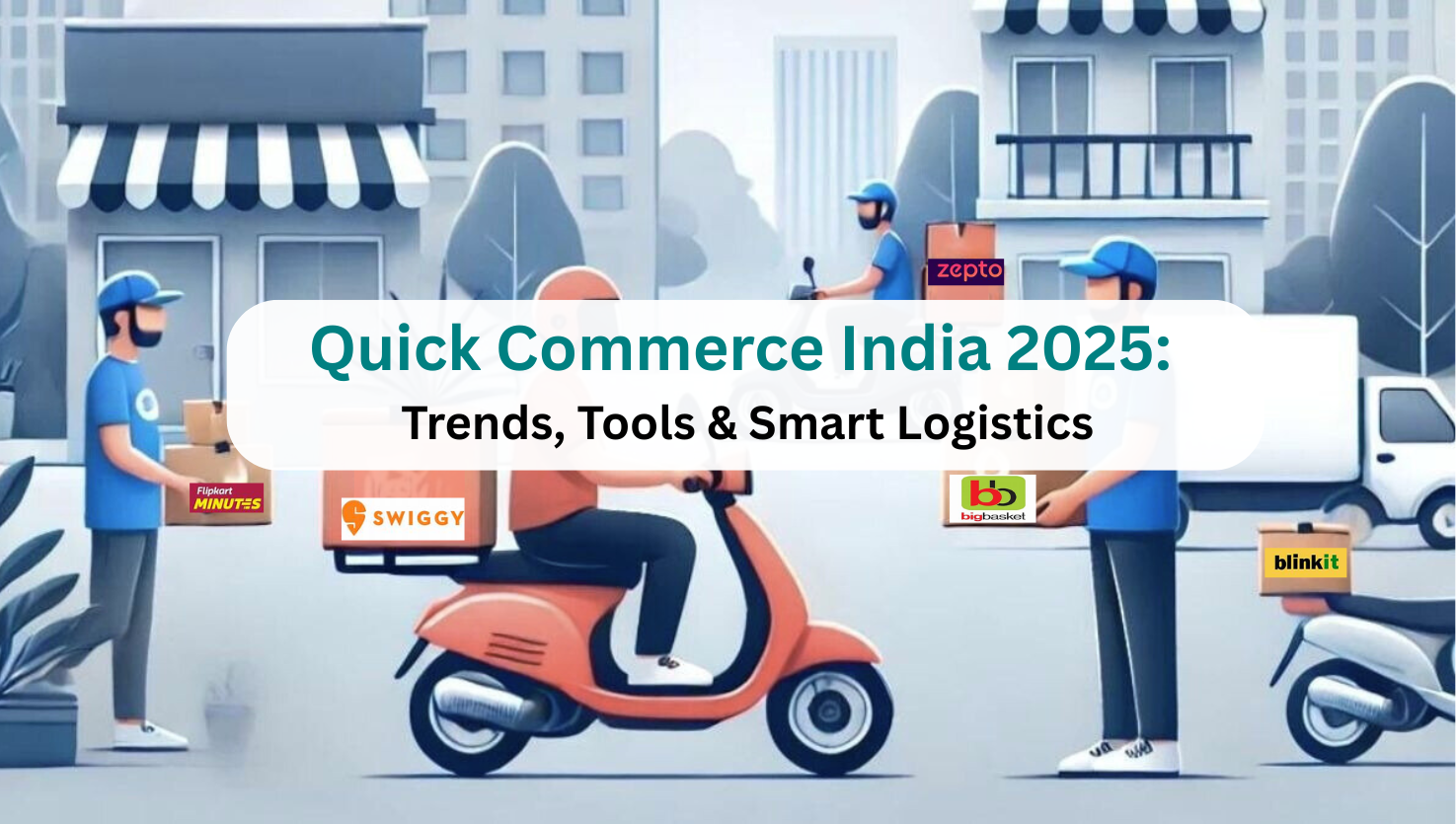
Just a decade ago, same-day delivery felt revolutionary. In 2025, even a few hours can feel too slow. Welcome to the age of Quick Commerce (Q-Commerce)—where groceries, medicines, gadgets, and even fashion can arrive at your doorstep in 10 to 30 minutes. What started as a convenience for busy city dwellers has become a mainstream expectation, making 2025 the tipping point for instant delivery worldwide.
What Is Quick Commerce?
Quick Commerce refers to ultra-fast delivery models powered by micro-fulfillment centers, “dark stores,” AI-driven logistics, and last-mile delivery innovations. Unlike traditional e-commerce, which prioritizes variety, Q-Commerce focuses on speed, convenience, and hyper-local availability.
Why 2025 Is the Breakthrough Year
1. Consumer Demand for Speed
Today’s consumers live in a culture of instant gratification. Whether it’s ordering late-night snacks, last-minute medicine, or ingredients for a recipe, waiting days is no longer acceptable. 2025 marks the year when speed stopped being a luxury and became a necessity.
2. Technology at Scale
AI-driven route optimization, automated warehouses, and even pilot projects with drones and autonomous vehicles have made quick commerce scalable. Delivery times are shrinking without compromising accuracy.
3. Expansion Beyond Metro Cities
What was once an urban privilege is spreading to Tier-2 and Tier-3 cities. Improved infrastructure and rising smartphone penetration are enabling businesses to tap into new markets.
4. Diversified Product Categories
Quick commerce is no longer limited to groceries. In 2025, consumers are ordering electronics, beauty products, pet supplies, fashion, and even pharmacy essentials within minutes.
5. Sustainability Efforts
To address concerns about packaging waste and emissions, companies are adopting eco-friendly delivery fleets, recyclable packaging, and carbon-neutral strategies—making fast delivery greener.
Benefits of Quick Commerce
-
For Consumers: Instant convenience, better availability, and stress-free shopping.
-
For Businesses: Higher frequency of orders, impulse buying opportunities, and stronger customer loyalty.
-
For the Economy: Job creation in logistics, warehousing, and last-mile delivery.
Challenges Ahead
-
Profitability Pressure: Maintaining speed while keeping costs low remains a challenge.
-
Workforce Concerns: Fair treatment of gig workers and delivery partners is under scrutiny.
-
Regulation & Compliance: Governments are tightening policies around safety, labor laws, and environmental impact.
The Future of Instant Delivery
By the end of the decade, Q-Commerce is expected to integrate seamlessly with AI, voice assistants, and even the metaverse, where customers can place an order in a virtual store and receive it in real life within minutes. The companies that balance speed, affordability, and sustainability will define the future of retail.
Final Thoughts
2025 is the year quick commerce stops being a buzzword and becomes the default way of shopping. In an era where time is the most valuable currency, instant delivery isn’t just about convenience—it’s about reshaping consumer expectations and the retail industry itself.
✅ Quick Commerce is no longer the future. In 2025, it’s the present.